
I meant to update this earlier, but was distracted by the job hunt. This is a positive step, I think, to using wind energy to lessen out dependency on fossil fuels.
Sites picked for pioneering wind test | Portland Press Herald.

I meant to update this earlier, but was distracted by the job hunt. This is a positive step, I think, to using wind energy to lessen out dependency on fossil fuels.
Sites picked for pioneering wind test | Portland Press Herald.
Went to the DownEast.com trivia question and was not terribly surprised by the answer to the question:
“How did the city of Belfast get its name?”
Answer:
“Many of the community’s founding fathers wanted to name their new settlement Londonderry, but a strong-willed settler, John Miller of Belfast, Ireland, made a protest and a coin was flipped. Belfast won.”
It doesn’t surprise me because Mainers – whether their families originated in Londonderry or Belfast or wherever – tend to be independent-minded. Stubborn even.
Maine’s history is full of cool little stories like this.
Here’s hoping any or all of these sites work.
Posted in Environment, Maine
This is a pretty, um, SWEET story.
Making candy by hand, one cane at a time | Portland Press Herald.
Posted in Food and Drink, Maine
Maine already has land-based windmill projects and tomorrow a panel will name locations to be tested for offshore wind fields. Here’s the Associated Press story printed in some Maine newspapers.
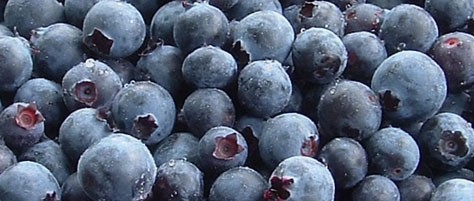
It may be a tossup for me which are the best – wild strawberries or wild blueberries.
Trust me, I could eat a vat of either plain.
Then there are the options. Strawberries and cream vs. blueberries and cream. Strawberries on pancakes vs. blueberry pancakes. Strawberry pie vs. blueberry tart.
And don’t even get me started on strawberry cheesecake vs. blueberry cheesecake. That would get me going like a pup chasing its tail.
But you get the point. It’s all good to me when it comes to strawberries or blueberries.
I recall as a child clambering out of my house overlooking Portage Lake, Maine, and running to the wild hayfield just beyond our backyard. There, scattered by the berry gods, were tiny wild strawberries growing on tiny stems among the hay stalks.
My sister and childhood friends would take various containers – usually cleaned plastic Cool Whip containers – and crawl through the wild hay to puck the tiny wild strawberries from their little stems. We would pick until the containers were full or we were, since often we ate as much as we put in the containers to be used later for strawberry shortcake or in the morning to top pancakes.
A horse trail used by the local stable ran along the back of the wild field at the edge of the forest and there were times we would sit in the field munching on the sun-sweetened fruit and staining our fingers red as the horses plodded by and butterflies fluttered here and there.
Portage Lake is a bit north for blueberry growth or we most likely would be filling those Cool Whip containers with those tiny blue spheres of heaven. (I hate it – hate, hate, HATE it – when people say something is a “tiny bit of heaven,” but in the case of strawberries and blueberries – especially WILD strawberries and WILD blueberries – it is the case.)
Cultivated strawberries and frozen blueberries are poor substitutes that I must suffer now that I am “from away.”
Of course, wild strawberries and wild blueberries are not the only foods I miss being from away. Lobster, of course, tops the list. I miss the chance to have lobster on a distinctly more regular basis than I do now. Sometimes boiled or steamed over an open fire on the beach or on the stovetop or barbecued on the grill on the patio or deck, drowned in melted butter and accompanied by steamers, corn on the cob and beer. Now that’s eatin’.
Fiddleheads, cabbage rolls, and fresh maple syrup are among the foods I miss being “from away.”
One of my fondest memories as a youngster comes from stopping on the way to my Uncle Clayton’s home just outside Fort Kent at Rock’s Motel and Diner, for some griddle-cooked hot dogs. My parents loved ’em. I loved ’em. I remember entering the tiny diner – the place always seemed to be crowded with hardworking woodsmen and farmers taking a break from their toil – and being hoisted onto one of the red vinyl stools to have one of Rock’s dogs. Or two. And onion rings, as I recall.
Today, familiar flavors from Maine are limited to canned sardines – several Maine and New Brunswick brands can be found in stores here in California.
And Christmas food baskets from home: Captain Mowatt’s Canceaux Sauce and assorted chocolate-covered blueberries, blueberry salsas, baked beans, and beer bread come from my sister, who lives on the right side of the border with New Hampshire, and my mother who still lives in the tiny town where I grew up, Portage, about a three hours drive north of Bangor.
And thank God that BevMo and other West Coast stores carry products from Sea Dog Brewing Co., Shipyard Brewing Co. and Allagash Brewing Co. How could a Maine boy get by without a brew from time to time that reminds him of home?
California is American’s bread basket – and fruit, vegetable, nuts, dairy and beef baskets, too. The climate and rich soil of the Central Valley make it prime for growing most things with relative ease. (Farmers, I know, there is nothing easy about farming. I did write relative ease.) The growing seasons in California are long and bright and sunny. Finding and keeping enough water to irrigate the fields is a continual and growing problem for California farmers.
And while blueberries do come from the Northwest, there are not the same as good, ol’ Maine wild blueberries.
And try to explain fiddleheads – or cabbage rolls or ploye [buckwheat and whole wheat pancakes introduced by French-Canadians to the Saint John River Valley] – to anyone who has not tramped through Maine woods to track the curly delight is like trying to explain baseball to a Mongolian sheep herder.
OK, enough of all that, because it is making me hungry. I have two very minor recipes involving blueberries, one for kiddies and one for adults. Don’t mix ’em up.
Purple Monster Oatmeal
½ cup Quaker Oats
¾ cup water
Handful of frozen blueberries (I know, I know, if you’ve got access to fresh blueberries, use them.)
Pinch of salt
Combine the water, blueberries and salt and bring to a boil. Stir in the oatmeal, reduce heat and cook for a minute. The juice from the blueberries will turn the oatmeal purpleish and should trick, er, entertain children into eating up all their oatmeal. That combines the positive aspects of oatmeal with the very positive aspects of blueberries in a colorful, fun dish.
OK, that was the recipe for kiddies … for all ages. Here’s the blueberry recipe for adults.
Blueberry Vodka
Citrus vodka (Oh, who am I kidding? Use whatever flavor of vodka you enjoy … in moderation.)
Frozen blueberries. (Yeah, yeah, yeah, use fresh if you’ve got ’em. But using frozen means the need for less ice and more room for vodka.) Put about an inch – or more, if you’d like – in the bottom of the glass.
Pour the vodka over the berries. Add cracked ice if you want it even colder, say for a summer drink.
See? Pretty minor recipes by any standards. But I’m guaranteeing that if children do not enjoy Purple Monster Oatmeal, they are bound to turn into very unhappy adults who won’t enjoy Blueberry Vodka. And, let’s be perfectly honest, we need more people who enjoy Purple Monster Oatmeal and Blueberry Vodka.
I did not find fun facts about strawberries, because, well, I didn’t look for them. The world of late has been pretty excited about blueberries. Here is what I found on the University of Maine Cooperative Extension website.
The biggest thing about blueberries everyone is learning about is their antioxidant properties. I say, if they taste good they must be good for ya. But here is what the website had on that.
“Wild blueberries have the highest antioxidant capacity per serving, compared with more than 20 other fruits. Using a lab testing procedure called Oxygen Radical Absorbance Capacity (ORAC), USDA researcher Ronald Prior, Ph.D., found that a one-cup serving of wild blueberries had more total antioxidant capacity (TAC) than a serving of cranberries, strawberries, plums, raspberries and even cultivated blueberries. Antioxidants help our bodies protect against disease and age-related health risks by canceling free radicals, which are unstable oxygen molecules associated with cancer, heart disease and the effects of aging. Potent antioxidants are highly concentrated in the deep-blue pigments of wild blueberries that neutralize free radicals and help prevent cell damage. Antioxidants also protect against inflammation, thought to be a leading factor in brain aging, Alzheimer’s disease and other diseases of aging. The potent antioxidants found in wild blueberries include other phytonutrients such as flavonoids and other phenolics such as anthocyanins; wild blueberries were higher in anthocyanin content than other tested fruits and vegetables.”
Posted in Food and Drink, Maine
Tagged blueberries, fiddleheads, lobster, Maine, ployes, Portage Lake, strawberries
Once again, I find myself going to the DownEast.com trivia section for a bit of entertainment. Today’s entry was a no-brainer.
What’s the best oceanfront drive in Maine?
Answer The Loop Road in Acadia National Park.
Here is a brief description from the National Park Service website:
“The 27-mile Park Loop Road system offers outstanding views of the park’s ocean shoreline, coastal forests, and mountain silhouettes. This historic road system is open from April 15 through November 30, weather permitting (small portions remain open all year).”
However, there are quite a few other options to scenic oceanfront drives in Maine and it just may be an enjoyable life-long task to seek out a suitable alternative. Please leave a comment with your favorite oceanfront drive.
Or, just for fun, don’t limit yourself to the oceanfront. Break it down to regions and give me your favorite rides in Maine.
I just saw bits and pieces of a story on PBS on this very thing and how the Pentagon is including the effects of climate when developing scenarios for future conflict. Some of the things stressed in the PBS story are alluded to in this Kennebec Journal story.
Posted in Environment, Maine
OK, I didn’t get why they had a poll on this story or why it was about whether readers thought the No. 13 was unlucky. But when you throw in Stephen King, almost anything makes sense … sort of.
But the real point is that some servicemen and women will get to see their families for Christmas and that’s cool.
Posted in Maine
Here’s the latest from DownEast.com’s trivia selection. I’m not sure “treehugger” is PC any longer, but what the heck. It is Maine, after all.
Who was Maine’s first treehugger?
Gov. Percival Baxter, who was considered something of a radical in the 1920s when he proposed a public park surrounding and protecting Mount Katahdin. Rejected by the legislature, Baxter used his own money to create his “forever wild” reserve. Today more than 60,000 people each year visit the two hundred thousand-acre Baxter State Park to enjoy the stunning beauty that his vision first recognized.
Mount Katahdin is the official northern tip of the Appalachian Trail, although some believe it actually goes to Mars Hill, Maine. My family went camping in Baxter State Park when The Sis and I were young. It was a fantastic adventure — hiking, skipping stones on water, watching the black bears wander into the park’s garbage dump for evening chow. As I recall, we may have stopped off at the Lumbermen’s Museum in Patten during the same trip.
Posted in Maine
Tagged Appalachian Trail, Baxter State Park, black bear, Maine, Mount Katahdin
Maine is incredibly fortunate to have someone the likes of George Mitchell call it home … that is, when he is not off trying to make peace in the world.
I grew up in a small town on the shores of Portage Lake in Aroostook County, the largest county in the state of Maine and the largest county in much of the eastern half of the country. It is so large, in fact, that both Connecticut and Rhode Island could fit within the borders of the county.
Portage Lake is situated along the Fish River Chain of lakes and nestled in ancient rolling hills that turn a deep, lush green in the spring and summer, a mosaic of colors in the fall, and a picturesque snow-covered landscape in the winter. Loon greet the sunset at night – as do fireflies and mosquitoes – and it is not uncommon for deer, moose, bear and other creates of the Deep Dark North Woods to wander out to visit the village on the lake’s southern shore.
It is a wonderfully beautiful place. A Maine tourism catch phrase some years ago read: “Maine, the way life should be.” The inspiration for that could have come from Portage Lake.
Earlier today I posted a poem by Ruby Garrison Searway, a poet from Aroostook County. I shared it for two reasons: 1) the poem used a touch of Maine humor about a snowstorm and that region was dumped on yesterday (My sister said she could relate); and 2) I am from that neck of the woods, as they say.
She is not a force in the literary world, but she did write a poem about Portage Lake. As I posted earlier, the parents of a girl I dated in high school gave me Searway’s “Yesterday’s Tomorrow” from which I took the earlier poem. The poem about Portage Lake, appropriately titled “Portage Lake,” was a supplement to that book, essentially a card on which the poem and line art representing the lake were printed.
“Portage Lake” by Ruby Garrison Searway
Cradled among Aroostook’s hills you lie,
And cabins face the sunset on your shore;
A motor’s widening wake disturbs the calm
Unbroken by the Indian’s silent oar.
Above a circling seaplane’s shining wing
An osprey hovers, and a loon’s weird cry
Echoes across the lake and near the reeds –
Pond lilies in a patch of mirrored sky.
Care drifts away when silver salmon rise,
And fires on the farther shore burn low;
Above West Hill the evening star’s soft light
Caught in your hear becomes a candle glow.
Gift of a wise and beauty-loving God,
Rare jewel of Fish River’s glistening chain,
A lonely city dweller far away
Longs for a friendly camp fire up in Maine.
I am not sure what she means by “silver salmon rise,” since Portage Lake was and very probably remains a poor fishing lake. It is too shallow and the environmentally questionable practices of long-gone mills and earlier cabin dwellers make it not the best of fishing spots.
It is, however, a fantastic place from which to venture to wonderful fishing and it is a classically beautiful location.
I still could not find much online about Searway, just online references to available copies of her books and one genealogical reference, but the website would not load and I could not read it. I believe she lived in Blaine and may have lived in Ashland, which is about 11 miles from Portage. The following is from the back cover of her book “Yesterday’s Tomorrows” published in 1974.
“Mrs. Searway’s poems are sparkling and alive. Her style is natural with a relaxed technique that flows from the pen of a truly great poet. A meticulously expert understanding of poetry has not stilted the lovely creations that her latest work enfolds. You will marvel at the delicacy of her tastes, such as the joy of touching a flower and smelling its fragrance. Her sense of compassion for wildlife is beautifully described in her poem ‘The Last Flight.’
“Everyone from New England will treasure a copy of this book by a Maine author who was born and has lived all her life in Aroostook County. Her wealth of knowledge of bygone days and their nostalgic heritage is exemplified in Yesterday’s Tomorrow. Walk with her into an old-fashioned kitchen and smell the pungent, spicy flavor of ‘New England Pickles,’ a poem of hers that is written with the quaint accent of ‘downeast’ colloquialisms. It warms the heart and gives the reader chuckles of delight.
“Her subjects touch all facets of life. It expressions superbly the very experiences that you and I have, such as in ‘The Day After Christmas.’ The exhaustion and litter of the home is so vividly portrayed, you almost sigh as you read it with complete understanding of the feeling and the scene.
“But do not be bewitched into thinking that Mrs. Searway is only taken up with the lesser tasks of living. Her poetry throbs with the depth of an insight into the Spiritual Realm. You will be brought into harmony with your Creator when you read her lovely lines of ‘Peace.’ Also the poems ‘A Prayer’ and ‘Search’ express the longings of heart that all of us have, culminating in the fulfillment of finding God’s presence. Mrs. Searway is truly a woman with Greatness of soul, sharing her genuineness through her beautiful poems.”
Was going through some stuff yesterday and found a book of poetry by Ruby Garrison Searway, “Yesterday’s Tomorrows,” and thought one of the poems might be appropriate for those of you digging out from the winter storm.
Beautiful Snow
(**##!!XX**)
By Ruby Garrison Searway
Beautiful shimmering drifting snow,
(Where in heck did my shovel go?)
Lovely glistening feathery heap,
(I’ll bet the stuff is ten feet deep.)
Marvelous wonderful tiny flakes,
(Darn it all! How my back aches!)
Shining crystals – a spotless bed,
(Another storm and I’ll drop dead.)
The book of poetry was printed in 1974 and given to me by the parents of the girl I was dating at the time. I could not find much about Searway online, just a bunch of eBay offerings of the book for sale or library references as to its availability. Searway wrote at least one other book, “Time to Remember” published in 1964, and I believe she lived in Blaine, Maine, and may have lived in Ashland.
If any readers of this blog have any more information about Ruby Garrison Searway, please add a comment to the blog entry.
I loved it when a storm caused snow closures. It was like getting an unexpected vacation day!
Posted in Maine
I’m not sure that I miss the cold and snow … too much.
Sloppy, fast storm swats northern Maine – Bangor Daily News.
Posted in Maine
Below is a link to a blog that provides some hope — and growth — for the future in newspapers.
Newspaper Execs Tell Investors There are Better Days Ahead in 2010.
However, as with any story, there are at least two sides. Alan D. Mutter has the other side on his Reflections of a Newsosaur blog.
Deer hunting, especially in the North Woods, is a pretty big part of life for Mainers. It is a rite of passage for boys and girls whose fathers – and sometimes mothers – drag them to their first hunters’ breakfast , pile them into all sort of vehicle, drive them into the wilderness, and help them slog through the woods to just the “perfect” site for bagging that first deer.
I know, I know, Bambi was a deer and killing deer is bad, bad, bad. At least, in the minds of many people.
But in many parts of the country, including Maine, hunting is more than just sport. Deer and other game are hunted for meat; some families, especially in this economic climate, are looking for meat from game to help them get through the winter. In most cases, it is not a life-and-death situation, but it is pretty serious.
And the deer population – and the subsequent decline in deer kills – is way down.
The effects go well beyond those to the individual hunter. I came across a blog entry on DownEast.com about the decline of the deer population and the far-reaching effects on the local and state economy. It is a pretty devastating situation.
Stores and restaurants, outfitters, sporting goods stores, hotels and motels, and hunting lodges, some of them in the same family for several generations, are hurting financially this year in part because there are fewer deer and fewer deer hunters.
My mother, who occasionally works at the small general store in my hometown of Portage, Maine, where deer kills are registered, said the take this year has been incredibly disappointing. She echoed some of the comments by the blog’s author, George Smith, who is described as “a columnist, TV show host, executive director of the state’s largest sportsmen’s organization, political and public policy consultant, hunter, angler, and avid birder and most proud of his three children and grandson.”
Smith wrote that deer population has been reduced by two back-to-back rough winters, poor habitat, and thinning by bears and coyotes. That – and I would dare say the sluggish economy – have caused longtime hunters to cancel or shorten their trips to the North Woods. Others have cut short their trips after spending days in the woods and not spotting deer or deer sign.
The blog outlines the economic hardship being caused to businesses and the financial loss to the state’s Department of Inland Fisheries and Wildlife in license fees.
As Smith says, the only real fix in the southern part of the state is to have a milder-than-recent winter. Mother Nature controls that.
But he also quotes a former game commissioner warning that deer hunting in the North Woods may never return. That would be a terrible loss to poor Mainers looking to stretch their grocery dollars by putting game on the table. And it would be even more so for the future generations of would-be hunters who will never be dragged to their first hunters’ breakfast, loaded into a rig, and taken to remote spots in the North Woods seeking to bag their first deer.
Here are links to a couple of news stories on the deployment of National Guard units from Maine and the rest of New England.
Maine, N.E. Guard prepare to deploy; ceremony today – Bangor Daily News.
Posted in Maine
Here’s a link to a Portland Press Herald story about a Pearl Harbor attack survivor.
Posted in Maine
The Portland-South Portland-Biddeford area are on the list that goes with this Forbes.com story on the “best bang-for-the-buck cities” in the country. Yeah, the region comes in at No. 36 and I have no idea where the metro area might have placed previously, but considering how many cities there are in this country and that the area ranked above quite a few areas that have a lot to offer, it is a very good thing.
Clicking on the head and text below should get you to the story and then you can click within the story to get to the overall list.



 Letters From Away
