
It may be a tossup for me which are the best – wild strawberries or wild blueberries.
Trust me, I could eat a vat of either plain.
Then there are the options. Strawberries and cream vs. blueberries and cream. Strawberries on pancakes vs. blueberry pancakes. Strawberry pie vs. blueberry tart.
And don’t even get me started on strawberry cheesecake vs. blueberry cheesecake. That would get me going like a pup chasing its tail.
But you get the point. It’s all good to me when it comes to strawberries or blueberries.
I recall as a child clambering out of my house overlooking Portage Lake, Maine, and running to the wild hayfield just beyond our backyard. There, scattered by the berry gods, were tiny wild strawberries growing on tiny stems among the hay stalks.
My sister and childhood friends would take various containers – usually cleaned plastic Cool Whip containers – and crawl through the wild hay to puck the tiny wild strawberries from their little stems. We would pick until the containers were full or we were, since often we ate as much as we put in the containers to be used later for strawberry shortcake or in the morning to top pancakes.
A horse trail used by the local stable ran along the back of the wild field at the edge of the forest and there were times we would sit in the field munching on the sun-sweetened fruit and staining our fingers red as the horses plodded by and butterflies fluttered here and there.
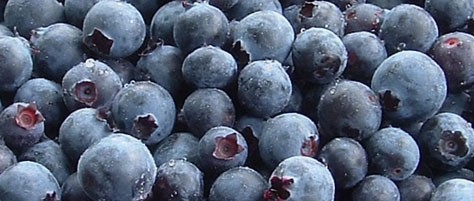
Portage Lake is a bit north for blueberry growth or we most likely would be filling those Cool Whip containers with those tiny blue spheres of heaven. (I hate it – hate, hate, HATE it – when people say something is a “tiny bit of heaven,” but in the case of strawberries and blueberries – especially WILD strawberries and WILD blueberries – it is the case.)
Cultivated strawberries and frozen blueberries are poor substitutes that I must suffer now that I am “from away.”
Of course, wild strawberries and wild blueberries are not the only foods I miss being from away. Lobster, of course, tops the list. I miss the chance to have lobster on a distinctly more regular basis than I do now. Sometimes boiled or steamed over an open fire on the beach or on the stovetop or barbecued on the grill on the patio or deck, drowned in melted butter and accompanied by steamers, corn on the cob and beer. Now that’s eatin’.
Fiddleheads, cabbage rolls, and fresh maple syrup are among the foods I miss being “from away.”
One of my fondest memories as a youngster comes from stopping on the way to my Uncle Clayton’s home just outside Fort Kent at Rock’s Motel and Diner, for some griddle-cooked hot dogs. My parents loved ’em. I loved ’em. I remember entering the tiny diner – the place always seemed to be crowded with hardworking woodsmen and farmers taking a break from their toil – and being hoisted onto one of the red vinyl stools to have one of Rock’s dogs. Or two. And onion rings, as I recall.
Today, familiar flavors from Maine are limited to canned sardines – several Maine and New Brunswick brands can be found in stores here in California.
And Christmas food baskets from home: Captain Mowatt’s Canceaux Sauce and assorted chocolate-covered blueberries, blueberry salsas, baked beans, and beer bread come from my sister, who lives on the right side of the border with New Hampshire, and my mother who still lives in the tiny town where I grew up, Portage, about a three hours drive north of Bangor.
And thank God that BevMo and other West Coast stores carry products from Sea Dog Brewing Co., Shipyard Brewing Co. and Allagash Brewing Co. How could a Maine boy get by without a brew from time to time that reminds him of home?
California is American’s bread basket – and fruit, vegetable, nuts, dairy and beef baskets, too. The climate and rich soil of the Central Valley make it prime for growing most things with relative ease. (Farmers, I know, there is nothing easy about farming. I did write relative ease.) The growing seasons in California are long and bright and sunny. Finding and keeping enough water to irrigate the fields is a continual and growing problem for California farmers.
And while blueberries do come from the Northwest, there are not the same as good, ol’ Maine wild blueberries.
And try to explain fiddleheads – or cabbage rolls or ploye [buckwheat and whole wheat pancakes introduced by French-Canadians to the Saint John River Valley] – to anyone who has not tramped through Maine woods to track the curly delight is like trying to explain baseball to a Mongolian sheep herder.
Two fun recipes
OK, enough of all that, because it is making me hungry. I have two very minor recipes involving blueberries, one for kiddies and one for adults. Don’t mix ’em up.
Purple Monster Oatmeal
½ cup Quaker Oats
¾ cup water
Handful of frozen blueberries (I know, I know, if you’ve got access to fresh blueberries, use them.)
Pinch of salt
Combine the water, blueberries and salt and bring to a boil. Stir in the oatmeal, reduce heat and cook for a minute. The juice from the blueberries will turn the oatmeal purpleish and should trick, er, entertain children into eating up all their oatmeal. That combines the positive aspects of oatmeal with the very positive aspects of blueberries in a colorful, fun dish.
OK, that was the recipe for kiddies … for all ages. Here’s the blueberry recipe for adults.
Blueberry Vodka
Citrus vodka (Oh, who am I kidding? Use whatever flavor of vodka you enjoy … in moderation.)
Frozen blueberries. (Yeah, yeah, yeah, use fresh if you’ve got ’em. But using frozen means the need for less ice and more room for vodka.) Put about an inch – or more, if you’d like – in the bottom of the glass.
Pour the vodka over the berries. Add cracked ice if you want it even colder, say for a summer drink.
See? Pretty minor recipes by any standards. But I’m guaranteeing that if children do not enjoy Purple Monster Oatmeal, they are bound to turn into very unhappy adults who won’t enjoy Blueberry Vodka. And, let’s be perfectly honest, we need more people who enjoy Purple Monster Oatmeal and Blueberry Vodka.
Fun blueberry facts
I did not find fun facts about strawberries, because, well, I didn’t look for them. The world of late has been pretty excited about blueberries. Here is what I found on the University of Maine Cooperative Extension website.
- There are 60,000 acres of wild blueberries growing in the southwest portion of the state.
- American Indians were the first to use fresh and dried blueberries for flavor, nutrition and healing qualities.
- Blueberries were not harvested commercially until the 1840s.
- The direct and indirect impact on Maine’s economy was $250 million.
- Maine is the largest producer of wild blueberries in the world and produces 15 percent of all blueberries in North America, both wild and cultivated
- Just 1 percent of the wild blueberry crop is sold fresh; the remaining is frozen and most is used as an ingredient.
- Lowbush blueberries are harvested by hand raking or by mechanical harvester in late July or early August when most of the berries are ripe.
Wild blueberries are good for you
The biggest thing about blueberries everyone is learning about is their antioxidant properties. I say, if they taste good they must be good for ya. But here is what the website had on that.
“Wild blueberries have the highest antioxidant capacity per serving, compared with more than 20 other fruits. Using a lab testing procedure called Oxygen Radical Absorbance Capacity (ORAC), USDA researcher Ronald Prior, Ph.D., found that a one-cup serving of wild blueberries had more total antioxidant capacity (TAC) than a serving of cranberries, strawberries, plums, raspberries and even cultivated blueberries. Antioxidants help our bodies protect against disease and age-related health risks by canceling free radicals, which are unstable oxygen molecules associated with cancer, heart disease and the effects of aging. Potent antioxidants are highly concentrated in the deep-blue pigments of wild blueberries that neutralize free radicals and help prevent cell damage. Antioxidants also protect against inflammation, thought to be a leading factor in brain aging, Alzheimer’s disease and other diseases of aging. The potent antioxidants found in wild blueberries include other phytonutrients such as flavonoids and other phenolics such as anthocyanins; wild blueberries were higher in anthocyanin content than other tested fruits and vegetables.”
Continue reading →

My name is Keith Michaud and this is “Letters From Away,” a blog written by a Mainer living outside the comfortable and sane confines of New England. The blog is intended for Mainers, whether they live in the Pine Tree State or beyond, and for anyone who has loved ’em, been baffled by ’em or both. Ayuh, I am “from away.” Worse still, I live on the Left Coast – in California. Enjoy! Or not. Your choice.


 Letters From Away
